The Spare Room as a Second Premises: Electrical Readiness for Home-Based Businesses
Many UK businesses begin in a room that was never designed for them. A spare bedroom becomes a treatment room, a dining area becomes a childminding space, or a converted loft becomes a recording studio. The building remains a home, but the pattern of use changes: equipment runs for longer, sockets are used more intensively, members of the public or children may be present, and insurers and clients begin to ask different questions. None of this automatically means a domestic installation must be rebuilt to commercial standards. It does mean the electrical arrangements deserve a documented, proportionate review before trading begins.
Why a change of use matters even when the building does not change
Planning terminology and electrical terminology do not always align. A home-based business may not require a formal change of use for planning purposes, yet the electrical risk profile can still shift. More frequent use of appliances, water near electrical equipment, heat sources, trailing leads in treatment areas and the presence of clients or children all affect how risk should be managed.
The sensible starting point is a room-specific risk assessment. This should record what equipment will be used, how often, who will be present and what could go wrong. The assessment does not need to be lengthy, but it should be specific. A beauty room with a basin, steamer and heated bed presents different considerations from a quiet therapy room with a lamp and an adjustable couch. A childminding setting needs particular attention to accessible sockets, cable management and the safe storage of equipment between sessions.
Begin with the supply, the consumer unit and the existing circuits
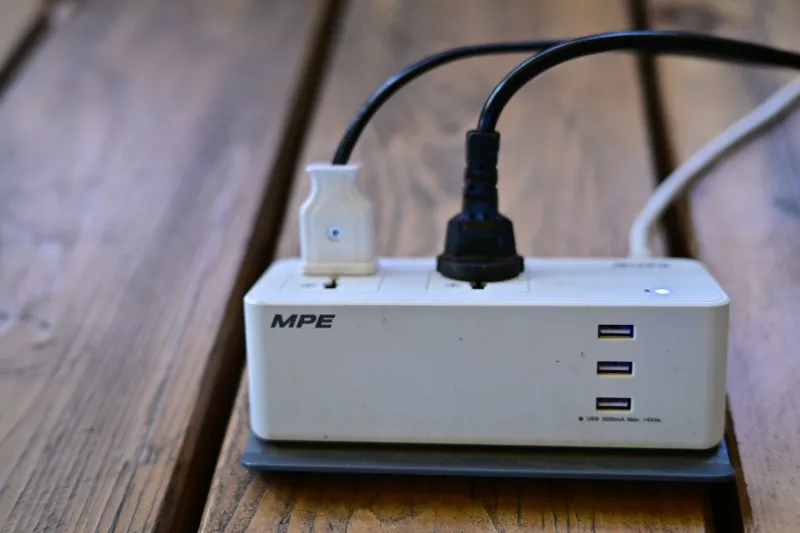
Before adding equipment, establish what the existing installation can support. The consumer unit should be clearly labelled, with circuits identified and residual current device protection provided where required by BS 7671. Sockets should be undamaged, securely fixed and adequate in number for the equipment planned. If the room currently relies on extension leads or multiway adapters, that is a warning sign rather than a workaround.
A qualified electrician can carry out a load assessment and check the condition of the relevant circuits. This may include verification of earthing and bonding, insulation resistance testing, polarity checks and RCD trip-time testing. An Electrical Installation Condition Report may be requested by an insurer or client, although it is not a universal legal requirement for every home business. Where an EICR already exists, check its date, scope and any observations. A report covering only part of the installation may not answer the questions a home-business insurer will ask.
High-load equipment should not be assumed to be suitable for an existing domestic circuit. Hairdryers, steamers, heated beds, kilns, large audio systems and space heaters can all change the demand profile. If a dedicated circuit is needed, the work should be designed and certified properly. In England and Wales, certain electrical work in dwellings is notifiable under Part P; the rules differ in Scotland and Northern Ireland, so local guidance should be checked.
Childminders: safety in a domestic setting with young children present
For childminders, the electrical installation is part of the safeguarding environment. The aim is not to create a clinical space but to remove avoidable hazards and to show that risks have been considered. Socket outlets should be in good condition and protected by an RCD where required. Trailing cables from lamps, monitors or charging equipment should be routed out of reach or enclosed. Equipment that becomes hot should be kept away from soft furnishings and stored safely after use.
A written risk assessment should cover electrical items used during the day, including any appliance brought in for activities. Portable appliance testing is not a blanket legal requirement for every childminding setting, but it is a useful way to demonstrate that mains equipment has been checked. Records of visual checks, PAT where applicable and RCD testing can sit alongside the general risk assessment. Smoke and heat alarms should be tested regularly, and escape routes should remain clear.
Salons and beauty rooms: water, heat and sustained demand
Salon and beauty equipment often combines water, heat and prolonged use. Hairdryers, straighteners, steamers, magnifying lamps, heated beds and wax heaters should be positioned so that cables are not strained and sockets are not splashed. Where a basin or wet area is present, the relevant bathroom or wet-zone requirements may apply; this is a matter for professional assessment rather than guesswork.
Circuit capacity deserves early attention. Several high-load appliances used at once can exceed what a domestic ring final circuit was intended to supply. A dedicated circuit for particular equipment may be the practical answer. RCD protection, suitable IP-rated accessories where needed and correctly rated flexible leads are all part of the design. Portable appliance testing is also worth considering for client-facing equipment, particularly where leads are handled and coiled repeatedly.
Therapists and home studios: smaller loads, different pressures
Therapy rooms and home studios may not draw as much current as a salon, but they often accumulate equipment: couches, heat lamps, diffusers, computers, monitors, audio interfaces, lighting and background heating. The risk is rarely a single dramatic load; it is more often a collection of modest loads spread across adapters and extension leads. Sockets should be sufficient for the equipment without daisy-chaining, and cables should be routed so they do not become trip hazards for clients or visitors.
In a studio, keep mains equipment away from drinks and away from areas where cables can be kicked or rolled over. If the room becomes warm, avoid using portable heaters on long extension leads. Any fixed alteration, such as additional sockets or a new circuit, should be installed and certified by a competent electrician.
Building an evidence file before opening
A simple folder, digital or paper, can answer most reasonable requests. It might contain the latest EICR, minor works or installation certificates for recent alterations, PAT records, RCD test results, equipment manuals, risk assessments, maintenance notes and the insurance schedule. This is not about creating unnecessary bureaucracy. It is about being able to show that the electrical arrangements have been considered and maintained.
A pre-trading checklist
- Identify every item of equipment and its power rating.
- Check that sockets are adequate, undamaged and not reliant on adapters.
- Confirm RCD protection and test it using the manufacturer's instructions.
- Keep cables away from water, heat and walkways.
- Record visual checks and PAT where applicable.
- Review fire alarms and escape routes.
- Obtain professional advice before adding circuits or high-load equipment.
- Store certificates and records where they can be produced on request.
When to call an electrician before opening
Call for advice if the consumer unit lacks RCD protection, if circuits trip repeatedly, if sockets or plugs show heat damage, if the room needs additional outlets, or if equipment with a significant load is planned. The same applies where water is close to electrical accessories or where a home studio or salon is being created in an outbuilding.
A home-based business does not have to feel like a commercial premises to be safe. It does need a clear-eyed review, proportionate records and professional help where the installation is being asked to do more than it was designed for. Taking those steps before the first client or child arrives is calmer than discovering the limits afterwards.