When the Mains Bites Back: A Plain-English Guide to Surge Protection in UK Consumer Units
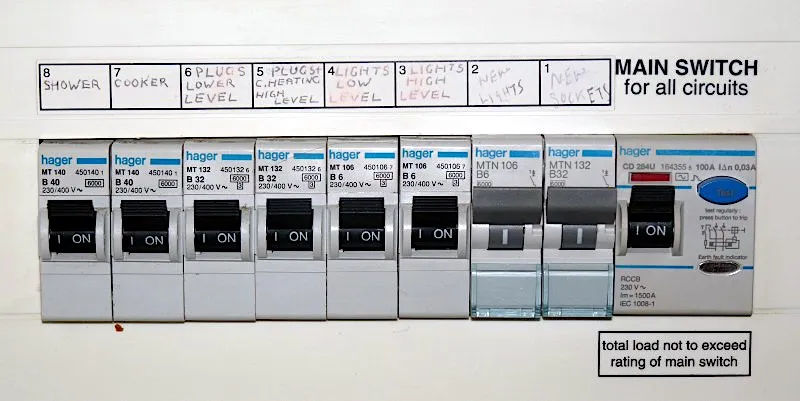
Photo: Pfnicholls, CC BY-SA 4.0, via Wikimedia Commons
When a kettle clicks on, a heat pump starts, or a storm passes overhead, the voltage in a UK home can briefly rise well above its normal level. Most of the time this is harmless. Occasionally, a transient overvoltage — a spike lasting milliseconds — can damage sensitive electronics, heating controls, smart meters or the inverter in an EV charger. A surge protection device, or SPD, is the component designed to reduce that risk. It is not glamorous, and it rarely announces itself. That silence is rather the point.
What an SPD actually does
An SPD provides a controlled path to earth for short-duration voltage spikes. It does not stop electricity from flowing, and it does not clean up the supply. Instead, it limits the peak voltage that reaches downstream equipment by diverting excess energy away from sensitive circuits.
In a domestic consumer unit, the most common arrangement is a Type 2 SPD. Type 1 devices are generally associated with installations where a direct lightning strike or overhead supply risk is more pronounced, while Type 3 devices are used closer to particular equipment. The right choice depends on the supply arrangement, earthing system, location and the equipment being protected. That is why an SPD should be selected by a competent person rather than bought as a generic accessory.
Where it sits alongside RCDs and AFDDs
Homeowners increasingly hear about RCDs and AFDDs, and it is easy to assume these devices all do the same job. They do not.
- An RCD, or residual current device, protects people by disconnecting the supply when it detects a leakage of current to earth.
- An AFDD, or arc fault detection device, looks for the signature of dangerous electrical arcing and isolates the circuit.
- An SPD protects equipment by limiting transient overvoltage. It is not a substitute for either an RCD or an AFDD, and it does not make a circuit safe to work on.
In a well-designed board, these devices complement one another. An SPD may sit near the main switch, while RCDs and AFDDs protect final circuits. Each has a different job, and each needs to be selected and coordinated properly.
Why the regulations mention it
The current edition of BS 7671, the IET Wiring Regulations, addresses protection against transient overvoltages. For domestic premises, the position is not always a blanket 'one size fits all' rule: the installer assesses the risk and, where the regulations permit omission, records the owner or occupier's decision. In practice, many new consumer units and full rewires now include an SPD as a matter of course, particularly where the home contains expensive heating controls, home office equipment, smart home devices or an EV charger.
This is not a reason to panic if your existing board does not have one. It is a reason to have a sensible conversation when the board is next changed, upgraded or rewired. A consumer unit is already being worked on at that point, so the marginal disruption of adding an SPD is usually modest compared with a separate return visit later.
What it can and cannot protect
An SPD can help reduce the risk of damage to boilers, heat pumps, smart home hubs, broadband equipment, PV inverters, EV charge points and other sensitive loads. It can also reduce the chance of a transient overvoltage causing nuisance tripping or premature failure of electronic controls.
It cannot, however, guarantee immunity from every event. A direct lightning strike carries enormous energy, and an SPD is not a lightning protection system. A sustained overvoltage — for example, a supply fault rather than a brief spike — is a different problem and may require different action. An SPD also cannot correct poor wiring, inadequate earthing or an overloaded installation. It is one layer of protection, not a cure-all.
During storms, unplugging sensitive equipment remains a prudent habit where practical. An SPD reduces risk; it does not make the home invulnerable.
How to check whether you already have one
You do not need to remove the cover of a consumer unit to check. Look at the front of the board for a device marked 'SPD', 'Surge Protection Device' or a manufacturer's surge arrester label. It is often one or two modules wide and may have a small status window. A green or clear window usually indicates that the device is serviceable; a red window often means it has reached end of life and should be replaced. Labels inside the board or on the schedule can also help.
If there is no obvious label, do not guess and do not open the enclosure. Ask an electrician to identify the components and explain what is fitted. The same applies if the board has been extended over the years and the labelling is unclear.
Questions worth asking before a board change or rewire
A short, focused conversation with your electrician is more useful than a long list of technical terms. Reasonable questions include:
- Is an SPD appropriate for this supply and location, and what type is being proposed?
- Where will it sit in the board, and does it need its own protective device?
- What does the status indicator mean, and how often should it be checked?
- Will it be coordinated correctly with the RCDs and AFDDs?
- What is it expected to protect, and what remains outside its scope?
- If an SPD is not being fitted, is the decision being recorded where the regulations allow omission?
- What is the replacement cost and expected service life?
None of these questions requires the homeowner to become an electrician. They simply make the design decision visible and documented.
A quiet device with a useful job
An SPD is not the most noticeable part of a consumer unit, and that is exactly why it is easy to overlook. It will not make a boiler last forever, and it will not replace good circuit design or regular inspection. What it can do is add a measured layer of protection against one of the less visible risks in a modern home. When the board is next open for a change or rewire, it is worth asking whether that layer is in place — and, if not, whether it should be.